TIPS & STRATEGIES

Mastering the Loop: Survive and Thrive

The time-loop is your greatest weapon and your biggest threat. Learn how to read upcoming cycles, sculpt the road with cards, and extract maximum value from every expedition in Look B.V..

Indie Strategy Roguelike Loops Card-Based Worldbuilding

A Structured Path from First Loop to Late-Game Mastery

This guide walks you from the fundamentals of loop survival through advanced deck design, class adaptation, and camp optimisation. Use it as a playbook you can revisit between runs.

Core Pillar

Survive the Loop

Every tile placed and enemy spawned reshapes your next lap. Track when days advance, anticipate new spawns, and avoid stacking lethal threats all at once.

  • Group high-reward tiles just before camp to heal after tough fights.
  • Schedule tough enemy clusters when you have active buffs or potions.
  • Use early laps to scout spawn patterns instead of rushing damage.

Core Pillar

Shape the World Deck

Your deck decides what the loop can become. Trim unfocused cards, double down on synergies, and align your terrain with your chosen class and target boss.

  • Limit niche cards that only shine in rare setups.
  • Bring at least one reliable heal and one scaling damage engine.
  • Anchor your deck around 2–3 proven interaction chains.

Core Pillar

Invest in Camp Power

The camp decides how fast every future loop escalates. Unlock key buildings early, then specialise into the playstyle you enjoy most: tanky, agile, or spell-heavy.

  • Prioritise buildings that unlock new cards or hero perks.
  • Upgrade supply to carry more game-changing artefacts.
  • Rotate camp research around your current progression wall.

Loop Management & Efficient Resource Gathering

Reading the Loop: Survive and Thrive

The time-loop mechanic is central to Look B.V.. Each lap increases enemy strength, spawn density, and the punishment for misplayed cards. Winning runs come from knowing not just where you are on the road, but when you are in the cycle.

  • Track danger spikes by daybreak: plan your hardest fights directly after natural heals from camp tiles or regen effects.
  • Stagger threats: avoid placing multiple elite-spawning tiles in a row. Interleave them with low-risk nodes to create breathing room.
  • Bank safe loops: if your build is still forming, avoid aggressive enemy tiles until your gear and buffs catch up.

Monitor upcoming threats on the road and in the day-night cycle. A good rule: if the next lap would add more than one new elite node plus scaling enemies, consider retreating with your current haul.
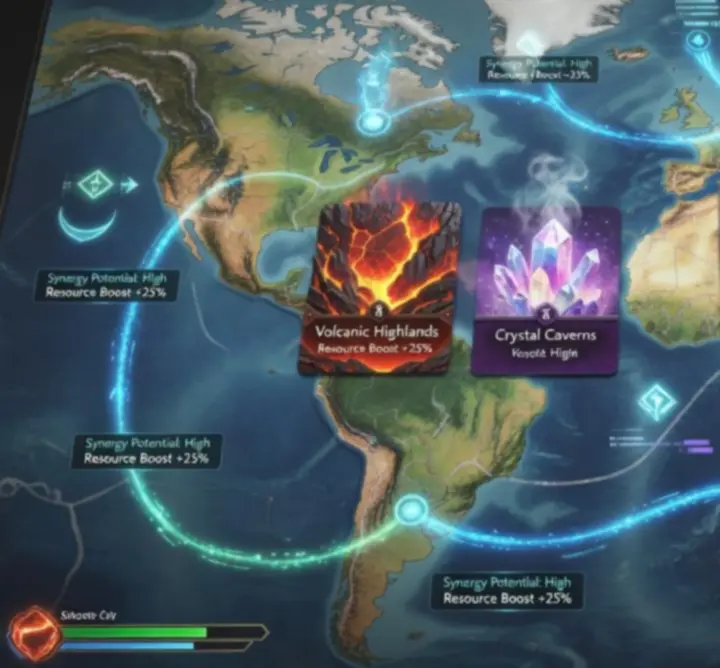
Efficient Resource Gathering

Efficiency is key. You want every lap to generate more resources than it costs in health and risk, without turning the road into an unwinnable gauntlet.

  • Time resource spikes before tough nodes: place high-yield terrain just before enemies that you know you can handle to maximise materials per fight.
  • Build harvesting clusters: group compatible tiles (like resource-rich groves or mines) around stable enemy zones instead of scattering them.
  • Avoid accidental blockades: do not over-stack structures that spawn units on every tile; you will choke the road and lose control of pacing.
  • Exploit early-day windows: place growth tiles just before dawn so they tick instantly, accelerating your economy.

As a benchmark, a successful early-game loop should net you enough materials to unlock or upgrade at least one meaningful camp structure upon return.

Quick Loop Health Check

Use this mid-run checklist to decide whether to push or pull back.

Signal Healthy Loop Warning Loop
Average fight duration < 8 seconds > 12 seconds
Health after hardest node > 55% < 35%
New gear quality Equal or better tier Mostly downgrades
Unplayed key cards Core combo online Core combo still missing

If two or more signals fall into the warning column, plan to retreat at camp rather than risk total loss later in the loop.

Beginner vs. Advanced Resource Goals

Adjust your expectations as your camp grows. Early runs prioritise unlocking basics; later, you chase high-tier upgrades.

Early Game

  • Gather enough materials to unlock the Forge and basic Supply.
  • Focus on safe, repeatable loops with low death risk.
  • Accept moderate loot quality in exchange for security.

Mid to Late Game

  • Farm rare materials required for high-tier upgrades.
  • Create high-risk, high-reward loops once your deck is online.
  • Abandon low-impact resources if they endanger a strong run.

Deck Building for Synergy

Compound deck strategies are the backbone of a winning run. Instead of throwing every card you unlock into the mix, curate a focused set that amplifies your hero's strengths and smooths out their weaknesses.

Designing Synergistic Decks

  • Pick a primary engine: decide whether your damage will come from raw stats, on-hit effects, or scaling buffs, then select cards that feed that engine.
  • Support with enablers: include cards that increase enemy density only if you also bring the heals, armour, or crowd control to survive them.
  • Limit variance: avoid overloading your deck with situational cards that rarely combo; they dilute access to your strongest interactions.
  • Plan for bosses: keep at least one card or combo that specifically addresses boss mechanics such as shields, summons, or damage spikes.

Aim for a lean, predictable deck where every draw either advances your combo, stabilises your health, or accelerates resource gain.

Example Synergy Packages

Lifesteal sustain Evasion & counter Summon swarms Burn & poison stacks Time Slow control
  • sustain cluster: enemies stacked near healing terrain provide relentless combat experience while your HP stays safe.
  • Control cluster: Time Slow and debuff tiles around boss approach give you space to stabilise before the showdown.
  • Economy loop: low-risk enemies combined with resource-boosting cards let you farm materials with minimal threat.
Strategic deck synergy layout showing terrain and enemy cards forming a powerful loop
Strategic deck synergy: pair terrain and enemy cards to spawn structures, trigger buffs, and maintain a controllable level of risk.

Deck Tuning Checklist

  • At least one repeatable healing or mitigation combo.
  • One primary damage scaling path that improves every loop.
  • Clear plan for how to handle elite enemies and bosses.
  • No more than 2–3 cards that only work in rare scenarios.
  • Deck size small enough that core pieces appear every loop.

If a card does not contribute to one of these points, cut it until you discover a specific synergy that earns its slot.

Adapting Hero Classes & Early Game Progression

Each class in Look B.V.—Wanderer, Sentinel, Arcanist, and Brute—thrives in different road conditions. Your deck, card placement, and upgrade path should flex around the hero you bring to the loop.

Adapting Hero Classes

Wanderer Sentinel Arcanist Brute
  • Wanderer: excels at flexible builds. Mix moderate enemy density with balanced stat gear and keep terrain varied to benefit from hybrid bonuses.
  • Sentinel: thrives on evasion, counter, and ranged control. Use tiles that slow or weaken enemies instead of boosting their raw HP.
  • Arcanist: scales with spell damage and status effects. Stack cards that apply Poison, Burn, or Time Slow while ensuring reliable mana recovery.
  • Brute: loves brawls and flat stat gains. Create dense combat zones near healing tiles and prioritise armour, max HP, and lifesteal.

Before each run, decide what your hero wants to fight and which tile combos are actually dangerous for their kit. Build accordingly.

Smart Early Game Progression

In early stages, survivability beats greed. Focus on foundational upgrades that smooth future runs instead of chasing risky high-tier drops.

  • Unlock core camp buildings first: target the Forge, Supply Depot, and any structure that unlocks new hero skills or critical cards.
  • Upgrade basic gear quality: a modest increase in starting equipment often multiplies your effective loop length.
  • Avoid overextending: retreat with a full backpack of resources rather than dying for one extra rare material.

Once your foundational upgrades are online, you can afford experimental decks and aggressive enemy densities.

Hero archetypes clashing with enemies along a dark looping road
Each hero archetype thrives under different battlefield conditions. Tailor your loop and deck to your chosen class.

Class & Loop Pairings

Class Preferred Loop Style Key Focus
Wanderer Balanced, mixed terrain Adaptability & flexible counters
Sentinel Low-contact, high-control Evasion, ranged damage, slows
Arcanist High-status density Spell damage, buffs & debuffs
Brute High enemy density near heals Armour, lifesteal, raw HP

Card Placement Tactics & Managing Enemy Waves

Card Placement Tactics

Thoughtful card placement is critical. The same card can either be a blessing or a curse depending on where—and beside what—you play it.

  • Create synergy pockets: place Vampire Mansions near Meadows or other healing tiles so that extra enemies also mean extra recovery or bonus effects.
  • Cluster Mountains and Rocks: stacking them in tight groups offers significant max health increases while unlocking hidden bonuses at certain counts.
  • Control spawn distance: move high-threat spawners away from camp so you do not enter loop resets at half health.
  • Reserve emergency space: keep a few tiles unplayed so you can drop clutch heals or control cards when the loop suddenly spikes in difficulty.

Managing Enemy Waves

Enemies scale with time and with your own choices. Overpopulating the road is one of the fastest ways to end a promising run.

  • Track spawn timers: be aware of tiles that spawn enemies each day versus each loop. Overlapping timers quickly overwhelm the hero.
  • Design difficulty curves: arrange the road so that fights start easy after camp, ramp up to a mid-loop challenge, then taper off again.
  • Time heals and buffs: trigger regeneration, shields, or Time Slow just before entering your most dangerous cluster of tiles.
  • Use temporary retreats: in some setups, returning to camp or avoiding an extra lap yields better long-term progression than risking it all.

Think of the loop as a playlist of encounters. You control the track order—use that power to keep your hero on the beat instead of buried under enemy noise.

Wave Control Patterns

Try these simple road patterns to stabilise runs while still farming aggressively.

  1. Ramp-Up Arc: start the loop with low-threat, high-resource tiles, gradually introduce elites in the middle, then finish with simple fights.
  2. Boss Runway: place debuff and Time Slow cards in the last quarter of the loop leading to the boss tile to give yourself a final stabilisation window.
  3. Farm Segment: dedicate one section to repeated, easy fights combined with XP or loot-boosting terrain for safe grinding.

Signs You Are Over-Spawning

  • Multiple tiles consistently spawn enemies you never clear.
  • You start new loops below 60% health even after camp.
  • You skip playing useful cards because there is no safe spot left.
  • Fights that were trivial a loop ago now require every potion.

When these signs appear, stop adding enemy tiles and focus on stabilising terrain and healing cards.

Understanding Advanced Buffs & Debuffs

Advanced status effects like Poison, Lifesteal, and Time Slow can swing seemingly impossible fights in your favour. Learn when to lean on them and when enemy debuffs demand a retreat.

Key Offensive Effects

  • Poison: deals damage over time, ideal against high-health enemies and bosses. Works best when you can safely kite or withstand longer fights.
  • Burn: consistent chip damage, strong in loops with many small enemies. Pair with crowd-control tiles for maximum value.
  • Armor Shred: reduces enemy defence, letting even modest attack upgrades hit far above their weight.

Key Defensive & Utility Effects

  • Lifesteal: converts damage dealt into healing. Shines on Brute-style builds and in dense combat zones.
  • Time Slow: delays enemy turns or actions, extending your survival in high-damage loops and giving regeneration more time to tick.
  • Barrier & Shields: temporary HP that soaks burst damage; use them just before entering elite tiles or bosses.

Stack complementary buffs rather than overlapping the same effect beyond diminishing returns. For example, mix moderate Lifesteal with Time Slow instead of chasing extreme Lifesteal alone.

Battle scene highlighting buff and debuff status effects during a loop encounter
Track buffs and debuffs carefully. A single stack of Poison, Lifesteal, or Time Slow can decide the outcome of a tight battle.

Debuff Awareness

Enemies also weaponise debuffs. Knowing when to endure and when to flee is crucial.

  • Stacking Poison with no reliable cleanse or regen in your deck.
  • Permanent or long-duration Time Slow combined with multiple enemies.
  • Armor shred when your build relies on high defence rather than evasion.
  • Curses that punish long fights when your damage is low.

If you routinely enter these states mid-loop, adjust your deck to include cleanses, shields, or alternative paths around problem tiles.

Optimising Camp Upgrades & Knowing When to Retreat

Optimising Camp Upgrades

Your camp is the long-term backbone of every run. Upgrading randomly slows your progress; upgrading with intent accelerates it dramatically.

  • Prioritise high-impact buildings: upgrade the Forge and Supply Depot early; they influence every class and playstyle.
  • Unlock new cards and hero skills first: these widen your strategic space more than small stat bonuses.
  • Specialise after the basics: once essentials are maxed, lean into class-specific structures that amplify your favourite builds.
  • Review bottlenecks: if a particular material always runs out, favour buildings that increase its yield or reduce its cost.

Risk vs. Reward: When to Retreat

Tactical withdrawals are a sign of mastery, not failure. Retreating with a backpack full of resources is often better than dying for a slim chance at one more upgrade.

  • Retreat when: gear quality stops improving across an entire loop, fights feel noticeably longer, and you rely on potions to survive normal tiles.
  • Push when: you still end the hardest segment above half health and your core combo is fully online.
  • Respect sunk-cost traps: do not stay in a doomed run just because you have already invested time; think in terms of future loops.

A good habit is to decide on a retreat threshold before starting each run—such as “if I cannot safely clear loop 6, I leave at camp regardless of loot.”

Upgrade Roadmap Suggestion

  1. Unlock the Forge for reliable gear scaling.
  2. Build and upgrade the Supply Depot to carry impactful artefacts.
  3. Add structures that unlock new cards and class perks.
  4. Improve healing and regen sources around camp for safer loops.
  5. Specialise into class-focused buildings that match your preferred hero.

Next Steps

Ready to put these principles into action? Dive deeper into class builds, card synergies, and the latest balance changes across the site.

For practical examples and run breakdowns tailored to the latest patch, keep an eye on the Blog and FAQ pages.