Cards & World Design
Shape the Loop. Control the Chaos.
Look B.V. turns every expedition into a tactical puzzle. Your deck of terrain and structure cards literally redraws the map, dictates what spawns, and decides whether your hero thrives or collapses under the loop.
Understanding Card Mechanics
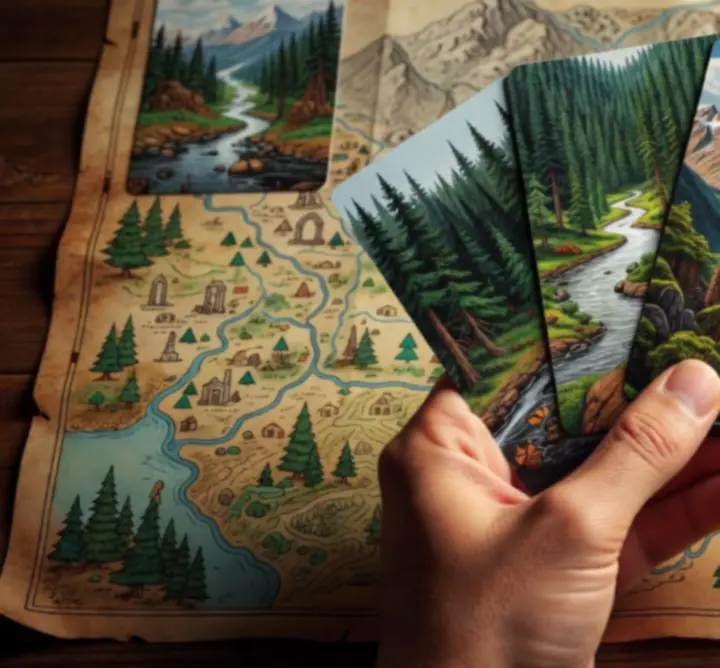
Look B.V. is built on a card-based world-building system. Instead of directly steering your hero every second, you sculpt the loop they must survive. Each card you play transforms tiles on the expedition track or the surrounding landscape, adjusting difficulty, rewards, and tempo.
Cards broadly fall into landscape and loop categories. Landscape cards reshape the environment around the path, while loop cards sit directly on the route your hero travels. Together, they form an evolving board state that controls everything from enemy density to health regeneration.
Core principles
- Placement is permanent for the duration of a run—misplaced synergies can lock in bad odds.
- Each tile has a role: some ramp difficulty, others stabilise your hero between spikes.
- Cards are economy levers, converting time and risk into resources, gear, or healing.
For a complete rundown of how cards interact with automated expeditions, classes, and camp upgrades, see the Game Overview after you finish this page.
Terrain Cards Explained
Terrain cards are the backbone of strategic progression in Look B.V.. They alter the expedition landscape in precise ways, adjusting map topology, resource yields, and the enemies that show up.
Each terrain card defines a unique mix of benefits (such as passive healing, bonus resources, or stat buffs) and costs (like tougher spawns or added chip damage). Mastery lies in weaving these effects into a coherent loop pattern instead of playing them at random.
| Archetype | Primary Effect | Strategic Use |
|---|---|---|
| Healing Terrain | Restores HP each loop or per tile pass. | Create safe corridors before boss tiles, stabilise glass-cannon builds. |
| Threat Terrain | Spawns extra enemies or elites. | Compress difficulty into specific zones for efficient farming. |
| Economy Terrain | Boosts resource drops or crafting mats. | Accelerate camp upgrades and unlocks across multiple runs. |
| Stat Terrain | Grants passive stats when grouped. | Stack near each other to hit hidden breakpoints for late-game loops. |
Because terrain is long-term, it defines your macro strategy for the run. Plan where you want high-pressure segments, where you want recovery, and where you want pure farming.
Landscape Synergies
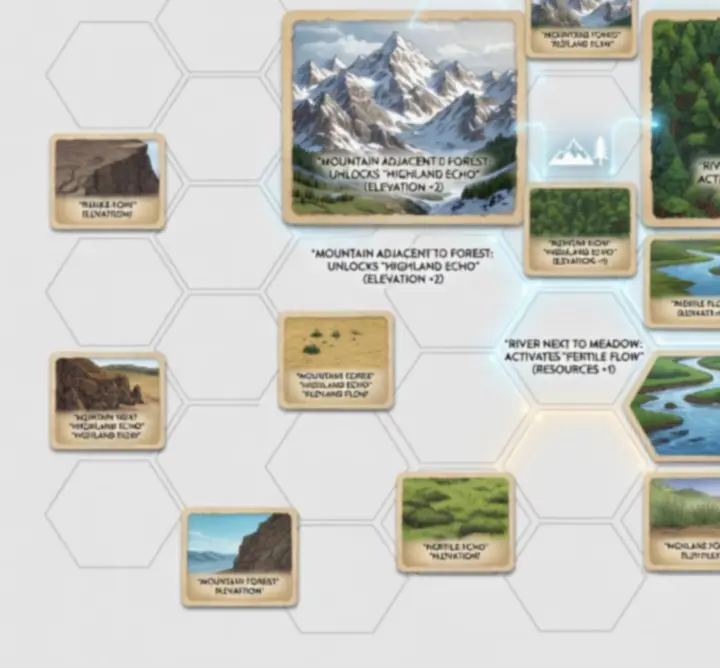
Look B.V. rewards players who think in patterns, clusters, and constellations. Many landscape cards offer small standalone bonuses but become dramatically stronger when arranged in specific formations.
These synergies can unlock hidden bonuses, alter spawn tables, or even transform terrain into entirely new tile types. Discovering and exploiting them is key to pushing deep-loop survival and high-difficulty expeditions.
Cluster Synergies
Some terrains gain stacking bonuses when placed in tight clusters. For example, a ring of defensive structures might dramatically increase armour or counterchance for certain classes.
Adjacency Chains
Other cards care more about neighbours than totals: placing specific terrain next to a core tile can spawn rare enemies, bonus chests, or elite camps.
Think of the landscape as a tech tree laid flat on the map. You are not just placing cards—you are building conditional logic for how the world behaves.
For practical layouts that integrate with your chosen hero, visit Classes & Builds and match synergies to your preferred playstyle.
Enemy and Resource Spawns
In Look B.V., card placement dictates where enemies and resources appear. Each terrain and loop card comes with a spawn profile: what can appear, how often, and under which conditions.
By understanding spawn rules, you can engineer loops that front-load farming, create deliberate danger spikes, or maintain steady, manageable encounters for fragile builds.
Spawn-control fundamentals
- Path tiles tend to govern enemy frequency and encounter type.
- Adjacent terrain modifies spawn tables, adding elites or rare mobs.
- Distance from camp and loop number can further scale difficulty and rewards.
Careful planning lets you separate farming zones from survival zones, feeding your hero high-yield fights early, then shifting into safer loops as gear stabilises. For practical spawn-routing advice, check the dedicated coverage in Tips & Strategies.
Card Rarity and Unlocking
Not all cards are created equal. Look B.V. categorises cards into multiple rarity tiers, each representing their impact, complexity, and availability. Higher rarity often means stronger effects or more conditional synergies, but also trickier deck-building implications.
Cards unlock through a mix of playtime milestones, in-run achievements, and long-term progression via camp upgrades. This gradual expansion keeps each new run fresh while steadily deepening your strategic options.
| Rarity | Role | Common Unlock Paths |
|---|---|---|
| Common | Core terrain, basic loop modifiers. | Available from the start, frequent drops in early loops. |
| Rare | Stronger bonuses, sharper downsides. | Mid-game achievements, specific enemy drops, camp buildings. |
| Legendary | Run-defining effects, unique synergies. | High-loop challenges, boss encounters, deep progression nodes. |
Effective players focus on unlocking synergetic sets rather than random rares. Plan your progression route from the camp screen and chase cards that reinforce your favourite class archetypes.
Deck Building Essentials
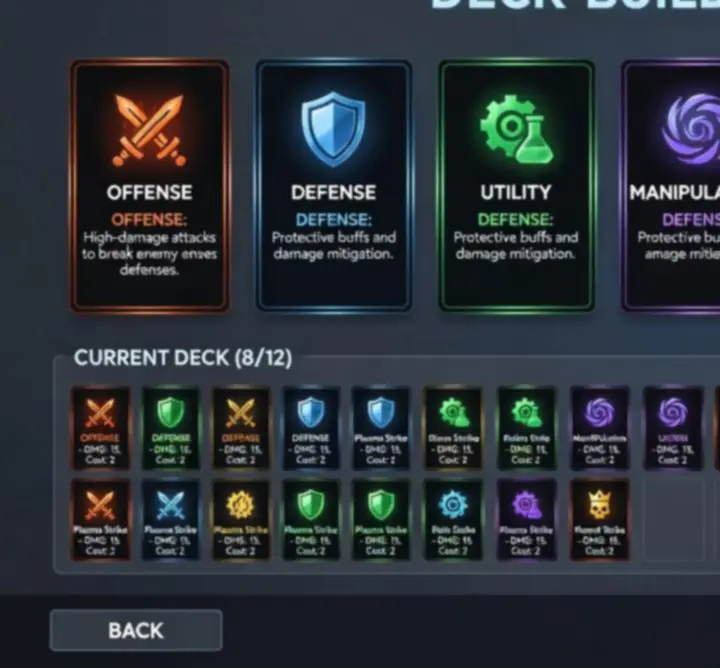
Your expedition deck is the strategic blueprint for every run. Before the loop begins, you choose which cards are allowed to appear. That single decision controls your pace, difficulty spikes, and access to specific synergies.
Overloading your deck with situational cards can dilute your draws, while too tight a list may leave you without outs when the loop turns against you. Finding the right balance is a core skill for climbing difficulty tiers.
Deck-building guidelines
- Define a win condition (e.g., evasion tank, lifesteal bruiser, summon swarm) and only include cards that support it.
- Limit redundancy: you do not need every healing card if one terrain type already covers sustain reliably.
- Respect class identity: builds that empower one class may cripple another; tune decks per hero.
For fully tuned deck lists aligned with specific hero archetypes, combine this section with our dedicated Classes & Builds and in-depth Tips & Strategies pages.
World Loop Evolution
Every time you place a card and complete a lap, the loop evolves. Enemy compositions change, terrain synergies stack up, and resource pockets emerge or dry out. The world is not static—it is a living record of your past decisions.
This evolution cuts both ways: an efficient early farm layout can mutate into an unwinnable gauntlet if you do not plan exit conditions or stabilising tiles. Learning when to stop placing cards can be as important as knowing where to play them.
Managing evolution across cycles
- Use early loops to set up economy and survivability before stacking pure difficulty.
- Introduce high-threat cards gradually, aligned with hero power spikes and gear upgrades.
- Maintain escape routes: zones of low intensity where you can recover and decide whether to retreat.
Understanding this long arc is vital for late-game pushes. For complete run planning—from first loop to final retreat—consult the advanced routing guides in Tips & Strategies.
Visual Gallery: Iconic Cards
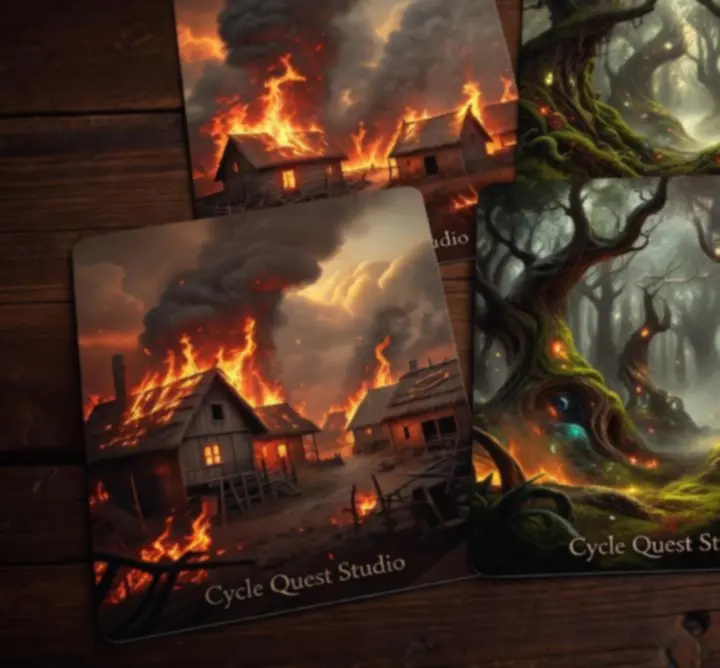
Browse some of the most recognisable terrain, structure, and event cards from Look B.V.. Each contributes a distinct strategic lever—whether by altering stats, spawning threats, or rewriting how the loop behaves.
Strategic card roles
- Terrain anchors set the foundation of your loop's economy and sustain.
- Structures specialise tiles into healing hubs, kill zones, or resource nodes.
- Events provide one-off spikes of risk, reward, or transformation.
Next steps
Ready to turn theory into victories? Pair what you've learned here with full build guides and tactical breakdowns.
Track balance changes & new card designs
Card behaviour, rarities, and synergies will continue to evolve. Follow balance patch notes, new card reveals, and design insights to keep your strategies sharp.